Terapias Inovadoras
Biologia de Sistemas e Computacional
Modelação Computacional e Matemática
Biologia Redox
Membranas Biológicas
Metabolismo
Biologia de Sistemas

Linhas de interesse
Relação entre o design e a função na sinalização redox e proteção antioxidante
Modelação da permeabilidade através de barreiras fisiológicas
Ferramentas computacionais para sistemas biomoleculares
Visão Geral
The Computational & Systems Biology Group focuses on two main research lines:
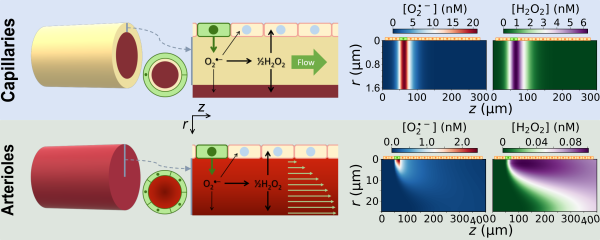
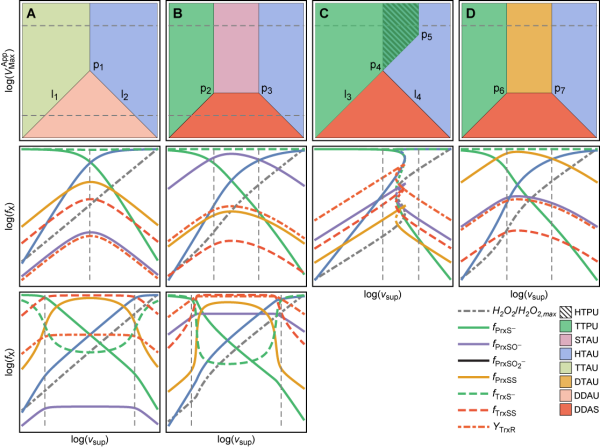
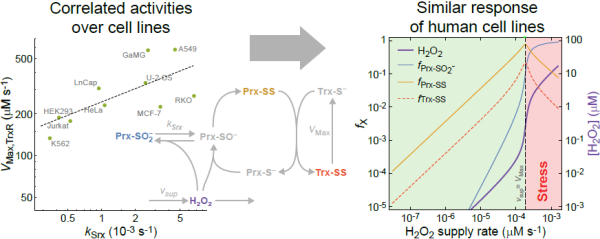
Organization principles of biochemical systems. We seek to discover, understand and exploit generic rules that relate the design of biochemical systems to function, with redox signaling and antioxidant protection in human cells as a main object of study. Hydrogen peroxide regulates multiple fundamental cellular processes (e.g. inflammation, apoptosis, cell proliferation), with strong implications for vascular development and degenerative diseases. However, the principles of this signaling remain mysterious. We apply our know-how in computational modeling and systems analysis and collaborate with leading wet-lab groups to clarify the most fundamental open questions in this area. We seek to achieve clinically actionable insights on how the core thiol-redox system in human cells integrates multiple cellular functions.
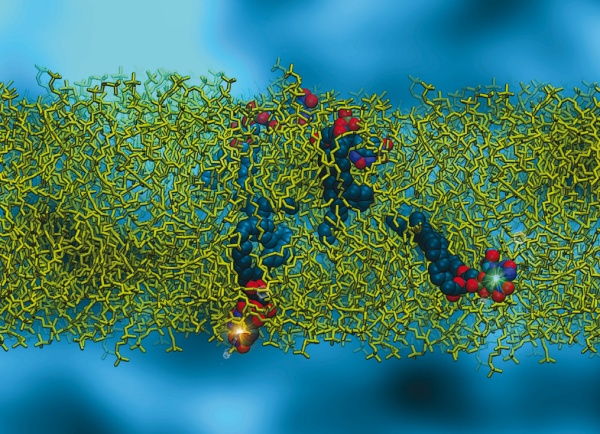
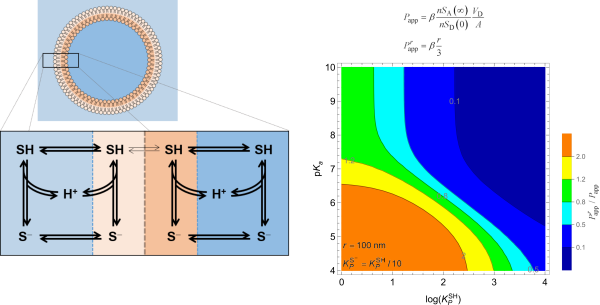
Modeling the permeation through physiological barriers. The long-term goal is to develop quantitative structure-activity relationships (QSAR) for the permeation of the blood-brain barrier (BBB). Failure to cross the BBB is the main attrition factor in the development of psycho-active drugs. The bioavailability of xenobiotics at the brain is strongly affected by their interaction with lipid bilayers and blood components. Our work shows that the partition of drugs among the compartments strongly affects the timing and effectiveness of their permeation across the BBB. We are modeling how molecular features of the xenobiotics impact on the kinetics of these critical steps and working to achieve better predictions of overall permeability.
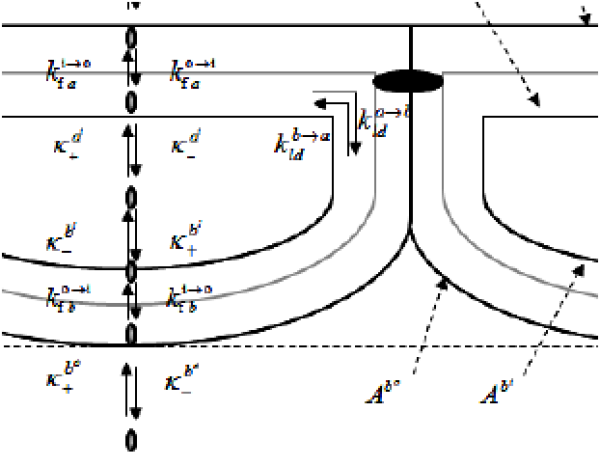
We also develop novel computational approaches to achieve the previous goals.
Publicações em destaque
Informação sobre artigos em revistas, atualizada a 23-11-2026, a partir da plataforma CIÊNCIAVITAE.
5 de 15 Publicações em destaque
Publicações
Informação sobre artigos em revistas, atualizada a 23-11-2026, a partir da plataforma CIÊNCIAVITAE.
5 de 54 Publicações